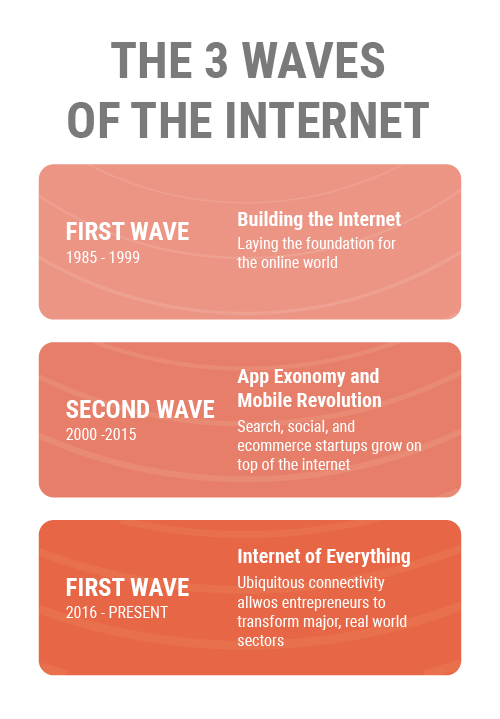
According to Steve Case, we are living in the third wave of the internet, where the online has stopped belonging to companies. In this context, most of the products are not just connected to the internet, but this connection in and of itself is what defines them. In the third wave, we can't talk about the Internet of Things anymore, but we can call it the Internet of Everything.
As more and more physical and digital products are being launched – and there is a lot of competition in each market and industry –, it is harder and harder to be successful. This is why, in the past decade, a lot more companies invested in User Experience, as they realized how vital it is, not just to create a customer-centered product, but also to avoid spending a lot of resources after the release.
For every dollar invested in UX, a business can expect to make a hundred dollars return. According to Forbes
And you might say that all this is not a big deal, but here are some more stats about the importance of investing in User Experience in the early stage of creating the product:
Think of the developers. It's estimated that they will spend up to 50% of their time on changes and rework. Fixing each glitch after launching the product will cost substantially more than fixing it during the prototyping phase.
Do you want ambassadors for your product? Focus on making your product user-friendly. Almost 90% of customers trust word of mouth more than online reviews. So, a customer-oriented product that makes the user happy will attract more and more customers. Harvard Business Review reported that over 20% of satisfied customers told 10 or more people about the experience.
Consider the revenue advantages. Companies that invested the most in User Experience had a sales increase of 75%, according to this Design Study – not to mention the added impact on customer retention and engagement that also had an impressive increase.